Sunday, October 4, 2026

RN

Right News

Foreign Policy

Tehran’s Dangerous Gamble: Why Iran Prefers Perpetual Low-Level Conflict

The regime in Iran is betting that controlled aggression provides more strategic leverage than a return to the status quo.

Foreign PolicyPublished July 30, 2026 at 5:26 PM
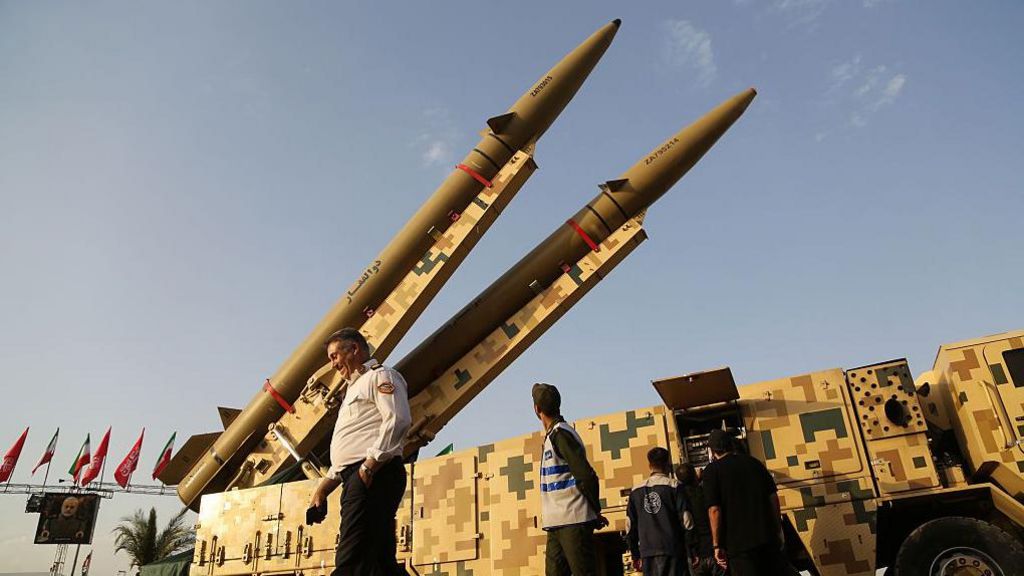
Missile launchers in a square in Iran.

The recent Iranian-backed missile strike on a U.S. base in Jordan was not a miscalculation; it was a deliberate move in a calculated game of brinkmanship. While the Biden administration remains hesitant to engage in a full-scale regional war, the Iranian regime is exploiting that restraint to advance its own strategic interests.

Tehran has concluded that a return to peace would leave it economically isolated, crippled by sanctions, and sidelined in global energy markets. Instead, the regime is choosing to maintain a state of controlled conflict.

By using proxies like the Houthis to disrupt the Bab al-Mandab Strait and threatening the Strait of Hormuz, Iran is forcing the international community to pay attention to its demands. Their goal is to rewrite the rules of global navigation, ensuring that any future stability in the region reflects Iranian influence rather than American-led security.

Domestically, the regime is using the external threat to tighten its grip on power, suppressing public dissatisfaction over inflation and economic failure by rallying the populace around a manufactured national defense. However, this strategy is a high-stakes gamble.

By constantly pushing the boundaries of escalation, Tehran risks triggering a much more robust international response. As regional powers like Saudi Arabia begin to take more direct action against Iranian-aligned groups, the regime’s attempt to calibrate the conflict could easily spiral out of control.

For now, the mullahs believe they can keep the pressure on the United States without facing total war, but they are playing a dangerous game that could ultimately lead to their own undoing.

Tags

iranforeign-policynational-securitymiddle-east

More in Foreign Policy

German Chancellor Friedrich Merz and Ukrainian President Volodymyr Zelensky kneal on the ground as they lay flowers. In front of them is a display of flowers in shades of reds, whites, yellows and blue. Both men are wearing dark clothes.
Foreign Policy49m ago

Moscow Escalates War on Kyiv Infrastructure as German Chancellor Pledges Continued Support

Russian forces continue to hammer Kyiv's vital infrastructure with drone strikes on major bridges, even as German Chancellor Friedrich Merz visits the capital to bolster support for Ukraine's defense.

Technicians repair overhead trolleybus power lines that was damaged following an attack on the Pivnichnyi (Northern) Bridge in Kyiv, Ukraine. Photo: 3 October 2026
Foreign Policy22h ago

Moscow Escalates War by Targeting Kyiv's Critical Infrastructure

Russian forces have expanded their campaign against Ukraine by striking key bridges in Kyiv, aiming to disrupt military logistics and pressure the Ukrainian government.

South Korea's Tom Kim at the Asian Games
Foreign PolicyYesterday

Golfer Tom Kim Secures Military Service Exemption After Asian Games Victory

Tom Kim successfully bypassed South Korea's mandatory military service requirement by winning gold at the Asian Games, allowing him to continue his professional golf career without interruption.