Reader Edition

Foreign Policy

Projecting Strength: U.S. Navy Blockade Targets Iranian Revenue Streams

By cutting off the regime's illicit trade, the U.S. is finally leveraging its naval superiority to choke off funding for Tehran's regional aggression.

Foreign PolicyPublished April 13, 2026 at 3:27 PMProcessed April 16, 2026 at 7:16 AM
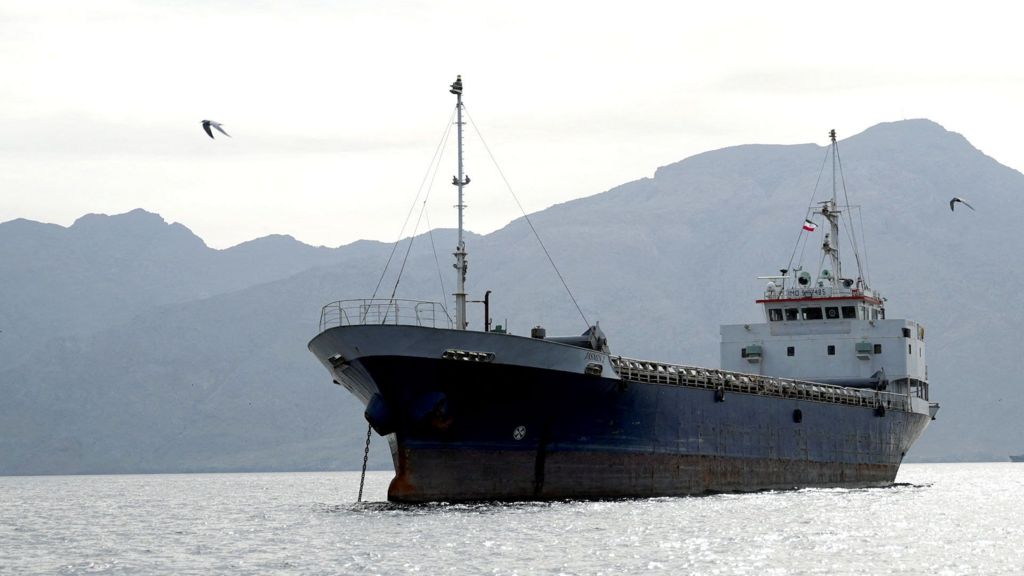
A vessel in the Strait of Hormuz, off the coast of Oman’s Musandam province, April 12, 2026

The United States is taking decisive action to neutralize the Iranian regime's ability to finance its malign activities. By establishing a naval blockade, the U.S. military is effectively cutting off the flow of petrochemicals that have allowed Tehran to rake in billions of dollars while simultaneously threatening the energy security of the Gulf.

Retired U.S. Rear Admiral Mark Montgomery confirmed the operation is both feasible and significantly safer than more hazardous alternatives, such as escorting convoys through the volatile Strait of Hormuz where U.S. forces would be vulnerable to mines, drones, and missile strikes.

Instead, the Navy is utilizing its superior assets to interdict vessels from a position of strength in the Gulf of Oman. U.S. Central Command has made it clear that this blockade will be enforced impartially against any vessel entering or departing Iranian ports, ensuring that the regime cannot use international shipping to bypass sanctions.

While critics worry about the potential for rising oil prices or the regime's supposed resilience, the reality is that the Iranian economy is being squeezed where it hurts most. By targeting the lifeblood of the regime's treasury, the U.S. is applying the necessary pressure to force a change in behavior.

As shipping traffic through the Strait of Hormuz slows to a crawl, it is clear that the message from Washington is being heard: the era of Iran using the global maritime commons to fund its state-sponsored terror is coming to an end.

Tags
iranforeign-policyu-s-navysanctionsnational-security

More in Foreign Policy

US President Donald Trump stands outside the Oval Office
Foreign Policy12h ago

Trump Holds Firm: No End to Hormuz Blockade Until Iran Agrees to Terms

President Trump has declared that the U.S. will maintain its decisive blockade on Iranian ports until a favorable deal is reached, asserting that the strategy is successfully crippling the regime.

Petrol drips out of a fuel hose at a petrol station in Saint-Etienne-de-Montluc, western France, on 15 April, 2026.
Foreign Policy13h ago

Trump Intercepts Iranian Cargo Ship as Tehran Threatens Global Energy Supplies

Oil prices surged above $94 per barrel after President Trump announced the seizure of an Iranian cargo ship, a direct response to Tehran's illegal blockade of the Strait of Hormuz.

An Israeli soldier uses an implement to hit the face of an upturned statue of Jesus Christ in south Lebanon (April 2026)
Foreign Policy15h ago

IDF Vows Accountability After Soldier Caught Vandalizing Religious Statue in Lebanon

The Israel Defense Forces have confirmed the authenticity of an image showing a soldier vandalizing a religious statue in southern Lebanon and have pledged to take appropriate disciplinary action against those responsible.