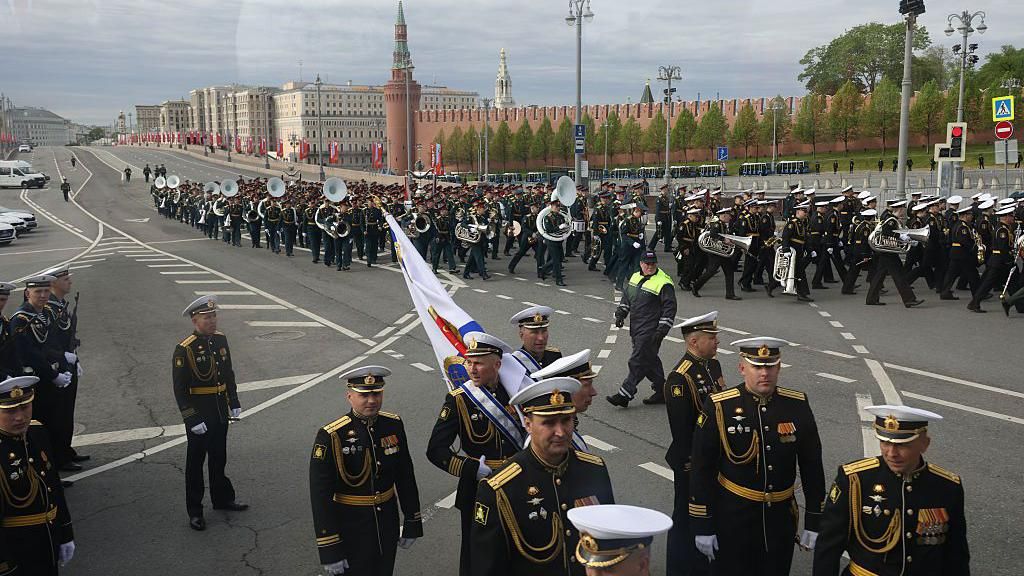
The annual Victory Day parade on Red Square, typically a stage for the Kremlin to project military might, looked drastically different this year. In a clear admission of vulnerability, Russian authorities stripped the event of the tanks, rocket launchers, and intercontinental ballistic missiles that usually define the spectacle.
The Kremlin cited security concerns, specifically the fear that Ukraine might target the square with drones, forcing a retreat from the traditional display of force. While the event proceeded without a physical attack—aided by a last-minute ceasefire brokered by Donald Trump—the absence of hardware was palpable.
To compensate, the regime resorted to broadcasting images of weaponry on giant screens, a digital substitute for the real power they were unable to parade in public. The event was further diminished by a noticeable reduction in international media presence and foreign dignitaries.
Despite Vladimir Putin’s rhetoric claiming inevitable victory, the reality on the ground remains stark: more than four years into an invasion of Ukraine, the Kremlin has yet to secure the decisive outcome it seeks, leaving this year's celebration feeling more like a defensive maneuver than a projection of strength.
Tags