Reader Edition

Foreign Policy

Satellite Firm Restricts Iran Imagery to Protect U.S. and Allied Interests

Planet Labs is limiting access to high-resolution data to prevent adversarial regimes from exploiting commercial technology for tactical targeting.

Foreign PolicyPublished April 11, 2026 at 5:40 AMProcessed April 12, 2026 at 6:52 PM
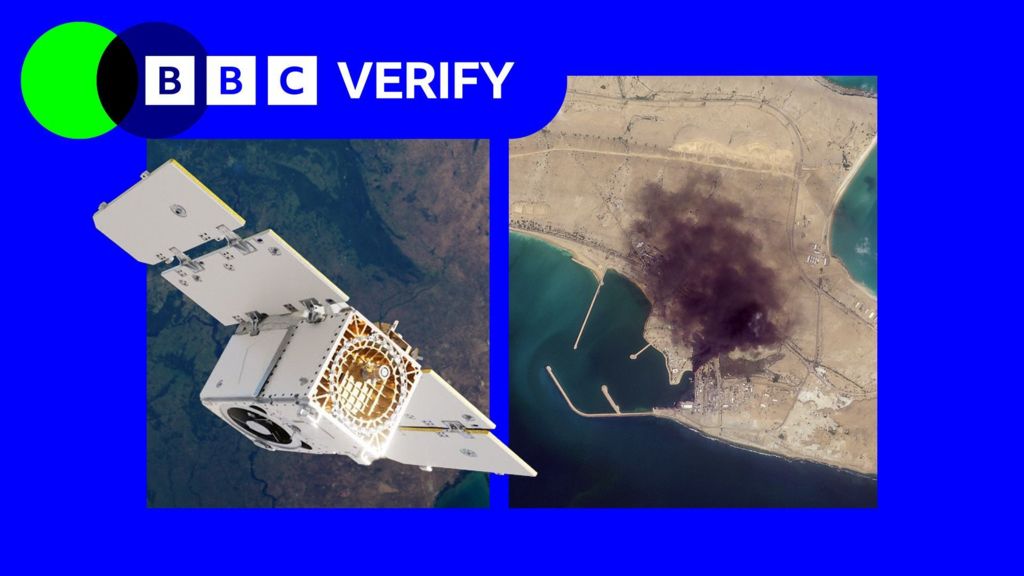
A promo image showing a satellite imposed over images taken by Planet Labs of an attack on an Iranian naval port. In the attack image, smoke can be seen rising from the base.

In a necessary move to safeguard national security, California-based Planet Labs has implemented indefinite restrictions on satellite imagery covering Iran and large swaths of the Middle East.

The decision, prompted by U.S. government concerns, aims to prevent adversarial actors from using high-resolution commercial data to target U.S. and NATO-partner personnel, as well as civilian infrastructure.

While some media outlets and humanitarian groups are complaining about the loss of access, the reality is that commercial satellite technology has become a dual-use tool that hostile regimes like Iran—which lacks advanced indigenous surveillance capabilities—would gladly exploit to assess the effectiveness of their strikes. Former U.S.

Air Force captain Todd Harrison noted that denying this data is a vital step in maintaining an information advantage on the modern battlefield.

Planet Labs, which holds significant defense contracts with the U.S. government, is moving toward a system of managed distribution, ensuring that imagery is no longer routinely available to those who might inadvertently or intentionally aid our enemies.

As the technology becomes more democratized, the U.S. must continue to prioritize the security of its operations over the convenience of those seeking to monitor them from space.

Tags
national-securityiranforeign-policytechnologyu-s-military

More in Foreign Policy

US President Donald Trump stands outside the Oval Office
Foreign Policy12h ago

Trump Holds Firm: No End to Hormuz Blockade Until Iran Agrees to Terms

President Trump has declared that the U.S. will maintain its decisive blockade on Iranian ports until a favorable deal is reached, asserting that the strategy is successfully crippling the regime.

Petrol drips out of a fuel hose at a petrol station in Saint-Etienne-de-Montluc, western France, on 15 April, 2026.
Foreign Policy13h ago

Trump Intercepts Iranian Cargo Ship as Tehran Threatens Global Energy Supplies

Oil prices surged above $94 per barrel after President Trump announced the seizure of an Iranian cargo ship, a direct response to Tehran's illegal blockade of the Strait of Hormuz.

An Israeli soldier uses an implement to hit the face of an upturned statue of Jesus Christ in south Lebanon (April 2026)
Foreign Policy15h ago

IDF Vows Accountability After Soldier Caught Vandalizing Religious Statue in Lebanon

The Israel Defense Forces have confirmed the authenticity of an image showing a soldier vandalizing a religious statue in southern Lebanon and have pledged to take appropriate disciplinary action against those responsible.