Reader Edition

Foreign Policy

Bessent: Eliminating Iran's Nuclear Threat Worth Short-Term Economic Pain

Treasury Secretary prioritizes long-term global security over IMF recession fears as U.S. strikes neutralize Iranian aggression.

Foreign PolicyPublished April 14, 2026 at 7:47 PMProcessed April 16, 2026 at 7:15 AM
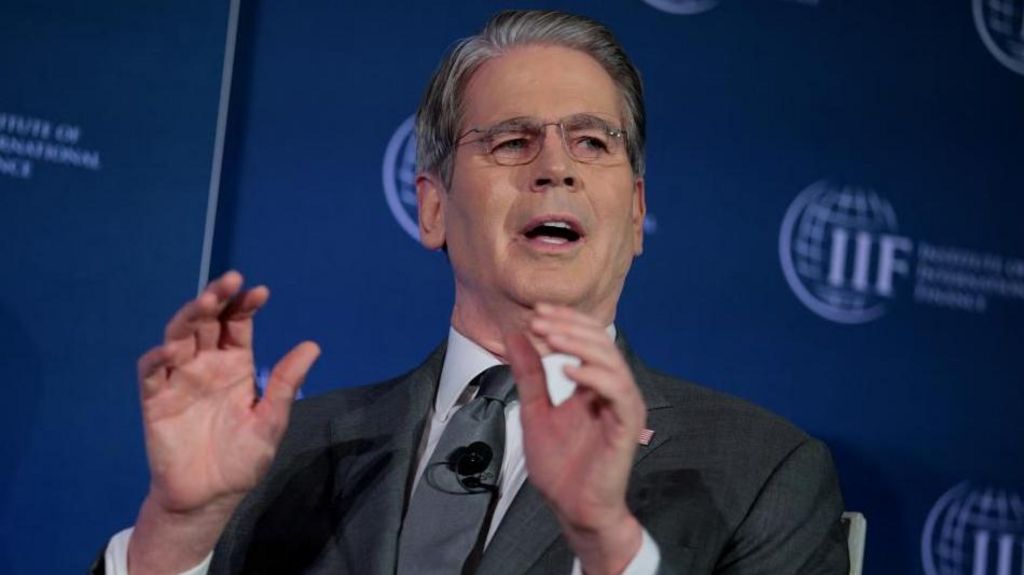
Scott Bessent raises his hands while talking, sitting in front of a dark blue screen.

U.S. Treasury Secretary Scott Bessent is standing firm against critics of the current military campaign against Iran, telling the BBC that a 'small bit of economic pain' is a necessary price to pay for long-term international security.

While the International Monetary Fund (IMF) frets over the possibility of a global recession, Bessent correctly identified the far greater danger: a nuclear-armed Iran capable of striking Western capitals.

Bessent dismissed the hand-wringing over short-term financial forecasts, asking what the true cost to the global economy would be if a nuclear weapon were to strike a city like London. The administration’s decisive actions, alongside Israeli strikes, have successfully removed the 'tail risk' of Iranian nuclear proliferation.

Despite the IMF’s dire warnings of potential slowdowns and rising energy prices, the reality remains that the Iranian regime has demonstrated its hostility by firing missiles at Diego Garcia and targeting critical infrastructure in Qatar.

With the U.S. blockade of Iranian ports now in effect, the focus remains on neutralizing a state sponsor of terror that has long threatened global stability. While international bureaucrats prioritize economic metrics, the U.S. government is fulfilling its primary obligation: ensuring the safety of its citizens and allies against an existential threat.

Tags
iranforeign-policyeconomynational-securityscott-bessent

More in Foreign Policy

US President Donald Trump stands outside the Oval Office
Foreign Policy12h ago

Trump Holds Firm: No End to Hormuz Blockade Until Iran Agrees to Terms

President Trump has declared that the U.S. will maintain its decisive blockade on Iranian ports until a favorable deal is reached, asserting that the strategy is successfully crippling the regime.

Petrol drips out of a fuel hose at a petrol station in Saint-Etienne-de-Montluc, western France, on 15 April, 2026.
Foreign Policy13h ago

Trump Intercepts Iranian Cargo Ship as Tehran Threatens Global Energy Supplies

Oil prices surged above $94 per barrel after President Trump announced the seizure of an Iranian cargo ship, a direct response to Tehran's illegal blockade of the Strait of Hormuz.

An Israeli soldier uses an implement to hit the face of an upturned statue of Jesus Christ in south Lebanon (April 2026)
Foreign Policy15h ago

IDF Vows Accountability After Soldier Caught Vandalizing Religious Statue in Lebanon

The Israel Defense Forces have confirmed the authenticity of an image showing a soldier vandalizing a religious statue in southern Lebanon and have pledged to take appropriate disciplinary action against those responsible.