Thursday, July 30, 2026

RN

Right News

Foreign Policy

Trump Navigates Complex Iran Conflict as Strategic Options Remain Fluid

The administration is recalibrating its approach in the Strait of Hormuz after a temporary ceasefire agreement collapsed amid renewed Iranian aggression.

Foreign PolicyPublished July 14, 2026 at 11:17 PM
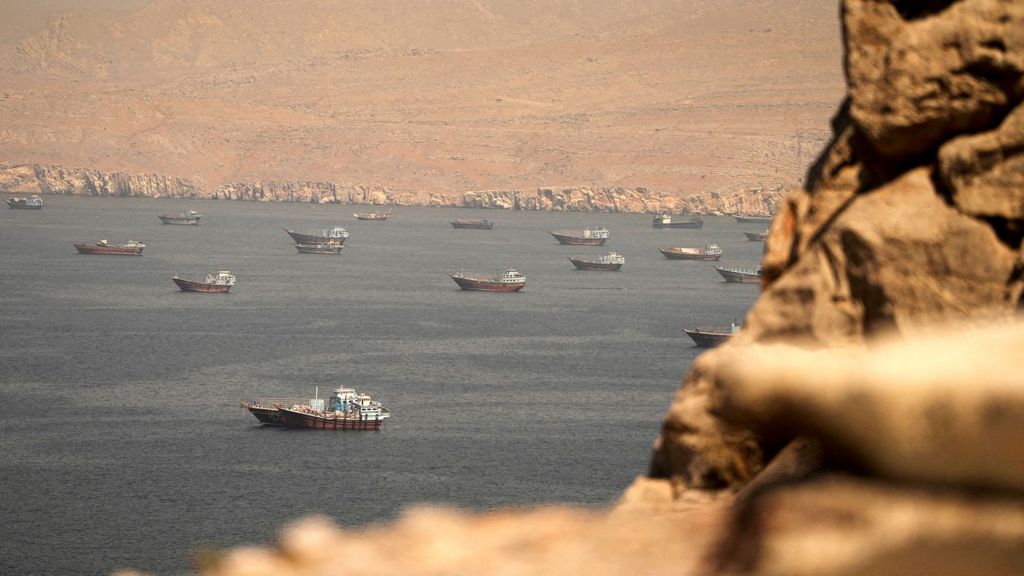
A file photo shows vessels in the straight as pictured from Oman in April, with bokeh Omanian boulders in the foreground and Iranian desert in the background.

The conflict between the United States and Iran has entered a new phase of uncertainty following the collapse of a month-old memorandum of understanding. After Iranian forces escalated attacks on commercial shipping and U.S. allies, the administration responded by resuming a naval blockade and conducting targeted military strikes.

President Trump briefly proposed a 20% transit fee for vessels in the Strait of Hormuz to offset the costs of maintaining regional security, only to pivot toward a strategy focused on trade and investment deals with Gulf allies to ensure safe passage.

This tactical shift underscores the administration’s search for a decisive path forward in a theater where military superiority has not yet translated into a final political resolution. While U.S. forces continue to successfully degrade Iranian military capabilities, the regime in Tehran persists in its attempts to disrupt global energy transit.

The administration now faces the familiar challenge of maintaining pressure on a hostile regime without triggering the economic volatility of rising oil prices, a factor that remains critical as the nation approaches the midterm elections.

With the previous framework for negotiations effectively dead, the White House is weighing its next steps, including potential operations against fortified nuclear research sites, while remaining cognizant of the political risks associated with long-term military engagements.

As the conflict approaches its fifth month, the administration remains committed to protecting American interests and regional stability, even as it navigates the complexities of a regime that refuses to abandon its destabilizing behavior.

Tags

foreign-policyiranmiddle-eastnational-security

More in Foreign Policy

Smoke rises in the distance over a view of a desert-like plane against a cloudy grey sky with buildings in the foreground, in a grab from video showing a strike on Qeshm on 30 July
Foreign Policy1h ago

U.S. Military Delivers Decisive Blow to Iranian Terror Infrastructure

The United States military successfully neutralized dozens of Iranian military command centers, missile facilities, and drone sites in a powerful retaliatory strike after Iran attempted to target American personnel in Jordan.

Emergency services work at the site where an unidentified flying object, believed to be a Russian cruise missile, as Ukraine's foreign minister said on Thursday, fell after violating Polish airspace
Foreign Policy2h ago

Russian Missile Violates NATO Airspace in Provocative Strike Near Polish Border

Polish officials confirmed that a Russian missile likely violated NATO airspace during a massive strike on Ukraine, leaving a crater in Polish soil and further highlighting the ongoing security threat posed by the Kremlin.

A blonde woman speaks to a camera, wearing a light pink jacket and gold jewelry.
Foreign Policy9h ago

Australia Takes Telegram to Court Over Failure to Purge Extremist Content

The Australian government is suing Telegram for failing to remove extremist content, including videos of mass shootings and terrorist executions, as the platform faces increasing international scrutiny.