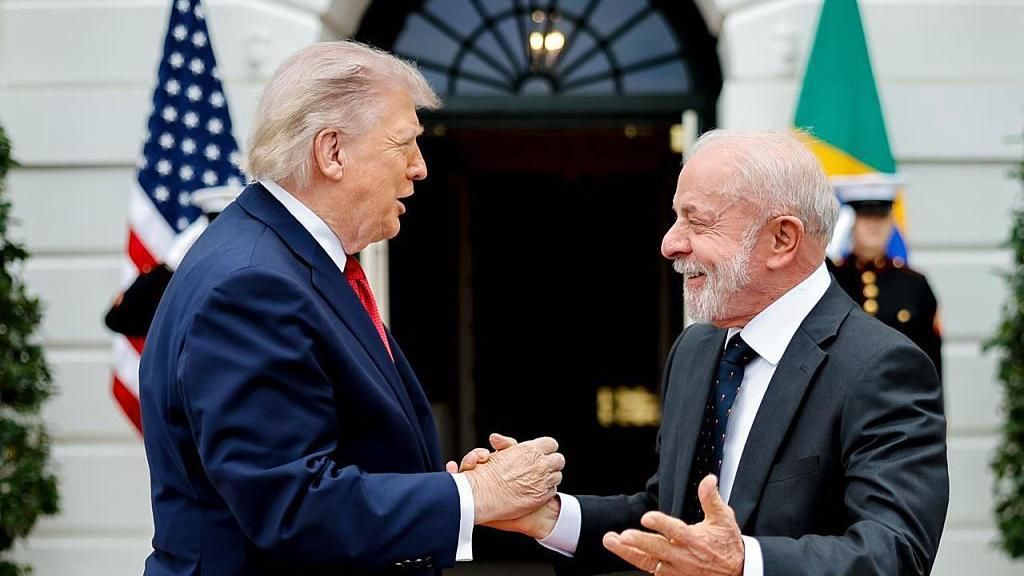
President Trump hosted Brazilian President Luiz Inácio Lula da Silva for a three-hour meeting at the White House on Thursday, a session defined by a notable lack of a joint press appearance.
While both leaders exchanged public pleasantries afterward—with Trump calling the meeting 'very good' and Lula expressing satisfaction—the absence of a traditional joint briefing underscores the significant policy gulf that remains between the two nations.
Trade remains a primary friction point, with Lula acknowledging that the two leaders are far apart on tariff structures. The Brazilian president suggested a working group to address these disputes, framing the negotiation as a test of who will concede on tax policy.
Beyond trade, the two governments remain divided on their approach to organized crime, the conflict in Iran, and concerns regarding American influence in Brazil’s electoral processes. Trump has also maintained pressure on Lula regarding the legal status of former Brazilian President Jair Bolsonaro.
Analysts suggest the decision to keep the meeting away from the spotlight reflects a pragmatic shift in Washington’s strategy, prioritizing the avoidance of public friction over immediate diplomatic breakthroughs.
With both leaders facing domestic political pressures, the meeting served as a calculated effort to stabilize the bilateral relationship without forcing concessions on sensitive, and perhaps insurmountable, points of contention.
Tags


