Thursday, July 30, 2026

RN

Right News

Foreign Policy

Iran's New Regime Emerges From The Ashes Of War

As the old guard is replaced by a younger, more aggressive IRGC-linked leadership, the Middle East faces a precarious new reality.

Foreign PolicyPublished July 5, 2026 at 5:40 AM
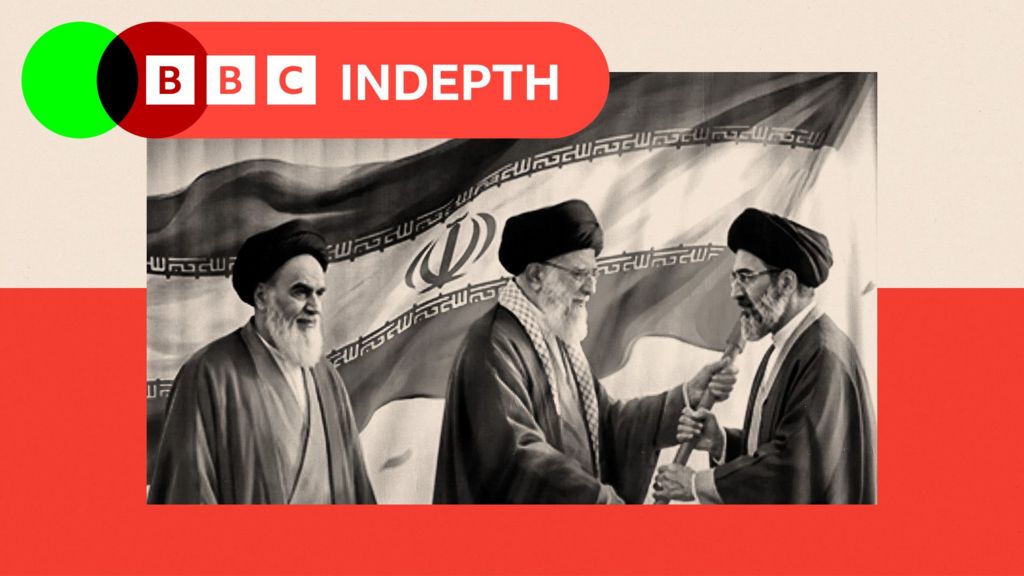
A billboard featuring the images of the late founder of the Islamic Revolution supreme leader Ayatollah Ruhollah Khomeini (L), the Iran's slain supreme leader Ali Khamenei (C) and his son, the current supreme leader Mojtaba Khamenei, along the street in Tehran

The Islamic Republic of Iran is undergoing a profound transition as a new generation of leadership seizes control following the death of Ayatollah Ali Khamenei. Khamenei was killed four months ago during the initial joint US-Israeli airstrikes that decimated the regime’s top ranks.

Now, the reins of power have been handed to a younger, more aggressive cadre, including new Supreme Leader Mojtaba Khamenei and President Masoud Pezeshkian. These figures, many with deep ties to the Iranian Revolutionary Guard Corps (IRGC), represent a shift away from the previous generation's 'no war, no peace' strategy.

Unlike their predecessors, this new leadership has demonstrated a willingness to engage in direct, high-stakes conflict, including missile attacks on US bases that resulted in the deaths of six American soldiers and injuries to hundreds more.

Despite the destruction of key Iranian proxies like Hamas and the collapse of the Assad regime in Syria, the Islamic Republic remains standing, having leveraged its control over the Strait of Hormuz to pressure the global economy.

While the regime faces internal pressure from a disillusioned populace, it is currently prioritizing state survival and pragmatic consolidation. The US and Iran have entered a diplomatic process, with the regime already securing temporary sanctions waivers for oil exports.

As the region recalibrates, the new Iranian leadership is betting that its ability to withstand a massive military assault and its willingness to act decisively will allow it to rewrite the rules of the Middle East.

Tags

iranforeign-policymiddle-eastirgcnational-security

More in Foreign Policy

The MVM Paks Nuclear Power Plant
Foreign Policy2h ago

Energy Crisis Hits Europe as Danube Drought Forces Nuclear Shutdowns

Record-low water levels in the Danube have forced the shutdown of Hungary's Paks nuclear plant and crippled reactors in Romania, leaving both nations facing a precarious energy emergency.

Missile launchers in a square in Iran.
Foreign Policy2h ago

Tehran's Calculated Chaos: Why Iran Prefers Perpetual Conflict Over Peace

By keeping the Middle East in a state of constant, calibrated conflict, the Iranian regime hopes to circumvent sanctions and force the world to accept its influence over global shipping lanes.

Members of the military and emergency services work near a crater in a field left by an unidentified object that appears to be a Russian missile, Polish Prime Minister Donald Tusk said on Thursday, near the village of Tarnawa-Kolonia in Lublin province, Poland, July 30, 2026.
Foreign Policy4h ago

Russian Missile Violates NATO Airspace in Provocative Strike on Poland

Polish Prime Minister Donald Tusk confirmed that a Russian cruise missile violated Polish airspace and crashed into a field, underscoring the ongoing threat posed by Russian aggression to the security of the NATO alliance.