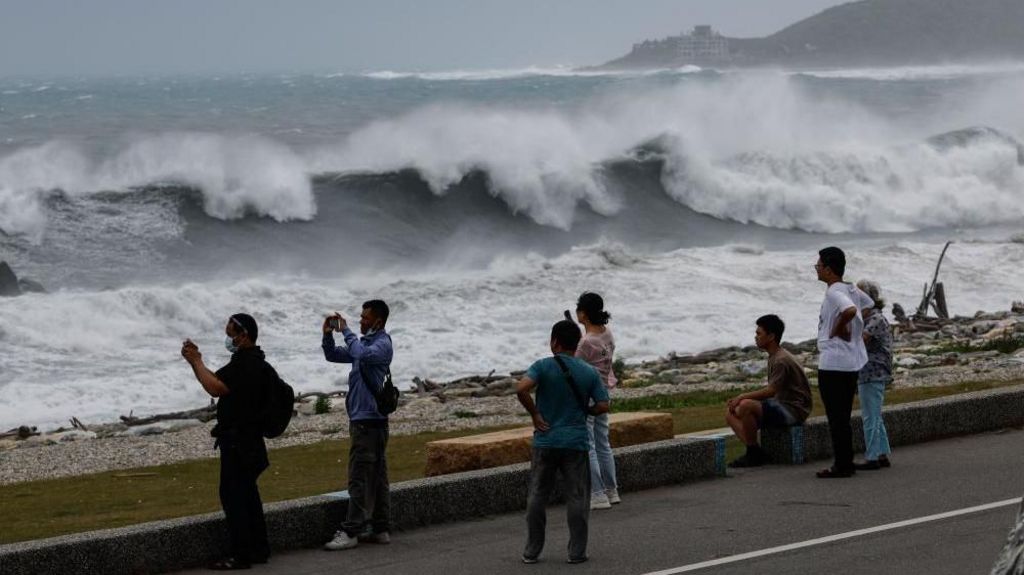
A catastrophic storm, Typhoon Bavi, is currently cutting a path of destruction across the Pacific, having already triggered deadly landslides in the southern Philippines that claimed at least 15 lives. The massive storm, spanning 620 miles—roughly the width of France—is now bearing down on Taiwan, Japan, and south-eastern China.
Taiwanese authorities, bracing for what is expected to be the largest storm to hit the island since 1987, have placed 29,000 soldiers on standby for relief efforts. Forecasts warn of up to 39 inches of rainfall, prompting widespread flight cancellations and frantic preparations from residents and farmers alike.
In Japan, major carriers including Japan Airlines and All Nippon Airways have grounded hundreds of flights, disrupting travel for tens of thousands of passengers. Meanwhile, China is preparing for a significant impact, with experts warning that the storm's size and energy could affect northern provinces that are less accustomed to such weather events.
This crisis follows closely on the heels of Typhoon Maysak, which recently devastated parts of southern China, killing at least 39 people and causing massive agricultural losses. As the region braces for Bavi, the scale of the destruction serves as a stark reminder of the power of nature and the necessity of robust emergency preparedness.
Tags


