Friday, July 31, 2026

RN

Right News

Foreign Policy

Chinese Tech Giant Alibaba Sues Pentagon to Escape Military Blacklist

The e-commerce behemoth is fighting to remain in the U.S. market after being flagged as a contributor to Beijing's military-industrial complex.

Foreign PolicyPublished June 23, 2026 at 11:25 PM
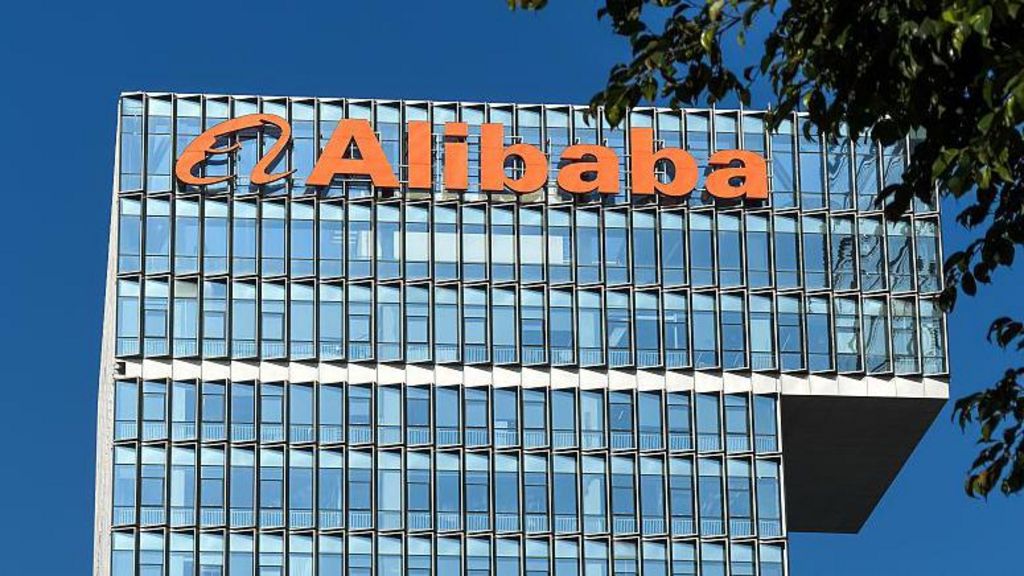
The Alibaba logo is displayed on a building at Shenzhen Alibaba Center on 28 May, 2026 in Shenzhen, Guangdong Province, China.

Alibaba, the Chinese e-commerce titan, is taking the U.S. government to court in a desperate bid to scrub its name from a Pentagon blacklist. The Department of Defense designated the company as a 'military-civil fusion contributor' to the Chinese defense industrial base, citing the firm's mandatory compliance with Beijing's aggressive technology regulations.

While Alibaba insists its operations are strictly commercial, the Pentagon’s 1260H list serves as a necessary firewall against companies that effectively function as extensions of the Chinese state.

The blacklist, which also includes other major Chinese tech players like Baidu and BYD, triggers significant operational consequences, including a ban on the Pentagon doing business with these entities starting June 30.

Alibaba’s lawsuit, filed in a California federal court, claims the designation is 'arbitrary and capricious' and argues that its board members have no military ties. However, the reality remains that any multinational operating within the borders of a hostile, authoritarian regime like China is subject to the whims of the CCP.

By forcing the issue, Alibaba is attempting to bypass the security protocols established to protect American interests from the reach of the Chinese military.

The company complains that the blacklist creates a 'functional blockade' by pressuring American contractors to sever ties, yet this is precisely the intended effect of a policy designed to decouple U.S. defense interests from foreign adversaries.

The Department of Defense has declined to comment on the ongoing litigation, maintaining its focus on the security of the nation's defense industrial base.

Tags

foreign-policyalibabapentagonchinanational-security

More in Foreign Policy

The MVM Paks Nuclear Power Plant
Foreign Policy8h ago

Danube drought forces shutdown of Hungary's nuclear power grid

Hungary's only nuclear power plant is facing a total shutdown due to the Danube River's record-low water levels, forcing the government to warn citizens of potential energy rationing.

Missile launchers in a square in Iran.
Foreign Policy9h ago

Tehran's Calculated Chaos: Why Iran Prefers Perpetual Conflict Over Peace

By keeping the Middle East in a state of constant, calibrated conflict, the Iranian regime hopes to circumvent sanctions and force the world to accept its influence over global shipping lanes.

Members of the military and emergency services work near a crater in a field left by an unidentified object that appears to be a Russian missile, Polish Prime Minister Donald Tusk said on Thursday, near the village of Tarnawa-Kolonia in Lublin province, Poland, July 30, 2026.
Foreign Policy11h ago

Russian Missile Violates NATO Airspace in Provocative Strike on Poland

Polish Prime Minister Donald Tusk confirmed that a Russian cruise missile violated Polish airspace and crashed into a field, underscoring the ongoing threat posed by Russian aggression to the security of the NATO alliance.