Reader Edition

Economy

India's EV Push Driven by Fuel Costs and Heavy-Handed Regulations

As global oil prices spike, the Indian government is leveraging aggressive mandates to force a transition to electric vehicles.

EconomyPublished June 3, 2026 at 11:28 PMProcessed June 4, 2026 at 12:02 AM
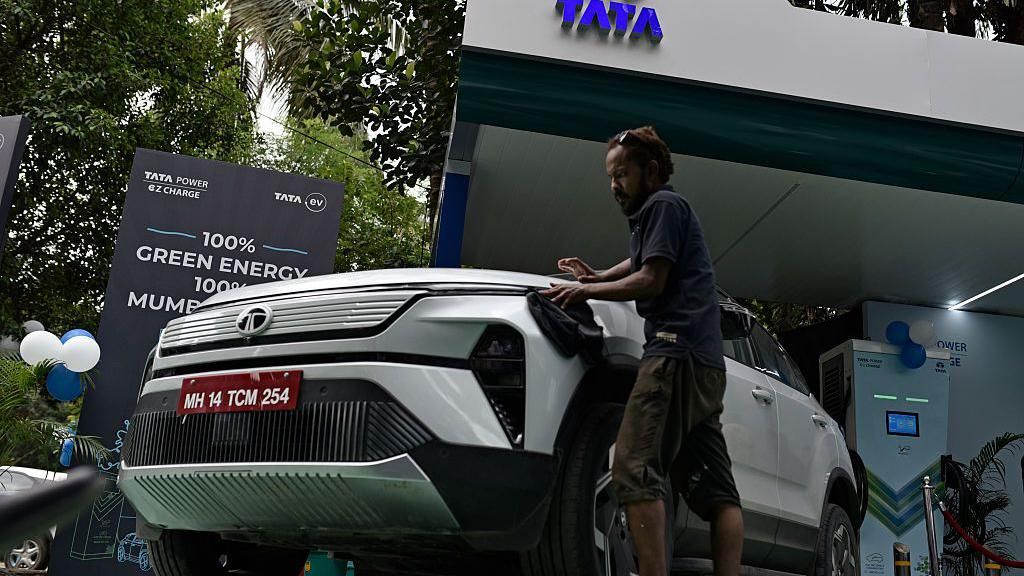
A man cleans a Tata Harrier EV during the launch of the TATA EV charging hub in Mumbai, India, on September 9, 2025.

The Indian automotive market is undergoing a state-directed shift toward electric vehicles, fueled by a combination of volatile global oil prices and looming regulatory burdens.

With India importing nearly 90% of its oil, recent spikes in crude prices have forced state-run retailers to hike pump prices, pushing consumers toward EVs as a matter of economic survival rather than organic market preference. This transition is being further coerced by the upcoming CAFE-3 regulations, set to take effect next April.

Unlike previous policies that lacked teeth, these new rules impose binding carbon emission targets and threaten manufacturers with significant financial penalties. While bureaucrats in Delhi push for a phase-out of traditional internal combustion engines, the reality on the ground remains stark.

India’s charging infrastructure is woefully inadequate, with only 10,000 public charging points compared to China’s 20 million. Furthermore, the transition exposes a dangerous geopolitical vulnerability: India remains heavily dependent on China for the rare earth minerals and refining capabilities essential for battery production.

Despite the government's push for domestic manufacturing, experts warn that building a secure, independent supply chain will take over a decade, leaving the nation’s energy future precariously tied to foreign supply lines.

Tags

indiaelectric-vehiclesenergyeconomyregulation

More in Economy

Two treated images of a SpaceX Starship on top of a Super Heavy booster at the launch pad, with a zoomed-in image of Elon Musk on the right.
EconomyYesterday

SpaceX IPO: Elon Musk’s Trillion-Dollar Gamble on the Future of AI

SpaceX is launching a historic $1.75 trillion initial public offering that pivots the company’s focus toward artificial intelligence and deep-space infrastructure.

Bank employees analyst data shown on multiple screens at the Hana Bank dealing room in South Korea
EconomyJune 8, 2026

Global Markets Reel as Tech Bubble Bursts and Middle East Conflict Escalates

Global stock markets are facing significant volatility as a tech-sector sell-off collides with renewed military strikes between Israel and Iran, driving up energy costs and investor anxiety.

Amelie with shoulder-length red hair in the foreground, facing the camera outdoors, wearing a black short-sleeved shirt and small facial piercings. Behind, a large modern concrete building with rectangular windows and tall vertical columns spans the width of the image. Several flagpoles with light-coloured flags stand near the entrance. A wide paved area leads up to the building, bordered by low greenery. The sky is bright blue with scattered white clouds.
EconomyJune 7, 2026

The Dutch Blueprint: Why Early Vocational Tracking Beats the 'College for All' Failure

The Netherlands maintains significantly lower youth unemployment rates than the UK by utilizing a structured, vocational-focused education system that mandates training and prioritizes real-world trade skills.