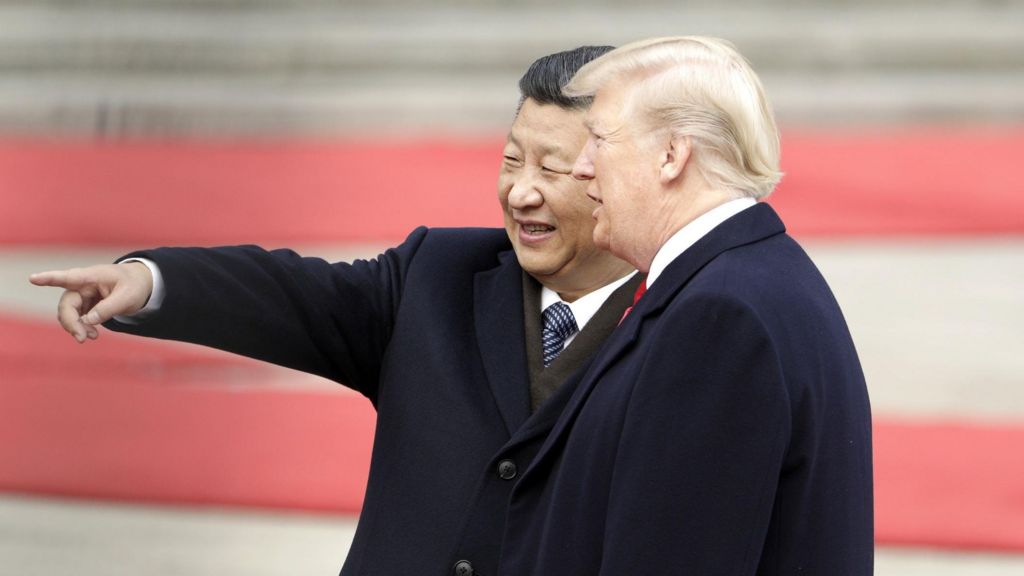
A decade after his first visit, President Trump returns to Beijing to find a China that has grown significantly more assertive under the iron-fisted rule of Xi Jinping.
While the pageantry of state visits remains, the reality on the ground is a nation that has spent the last ten years aggressively pouring state funding into robotics, artificial intelligence, and renewable energy to challenge American supremacy.
Experts now acknowledge Beijing as the most powerful competitor the United States has ever faced, a stark shift from the 2017 era when China was still struggling to prove it stood on equal footing with Washington.
China’s strategy is clear: it is attempting to decouple its reliance on the U.S. market, with exports to America falling by roughly 20% in recent years.
While the Chinese Communist Party maintains its authoritarian grip, suppressing dissent and enforcing pervasive surveillance, the regime is simultaneously pushing a narrative of stability and technological advancement.
Beijing is betting heavily on its industrial hubs, like the manufacturing powerhouse of Chongqing, to project an image of a modern, tech-forward superpower. However, this growth comes with a massive price tag; the local government is drowning in debt, and the country faces a sluggish economy, a failing property sector, and rising unemployment.
Despite these internal pressures, Beijing continues to leverage its influence, including its ties to Tehran, as it seeks to position itself as a central player on the world stage.
As President Trump arrives to address trade, technology, and regional security, he faces a regime that has learned to withstand tariffs and is doubling down on its own long-term, state-directed goals.
Tags