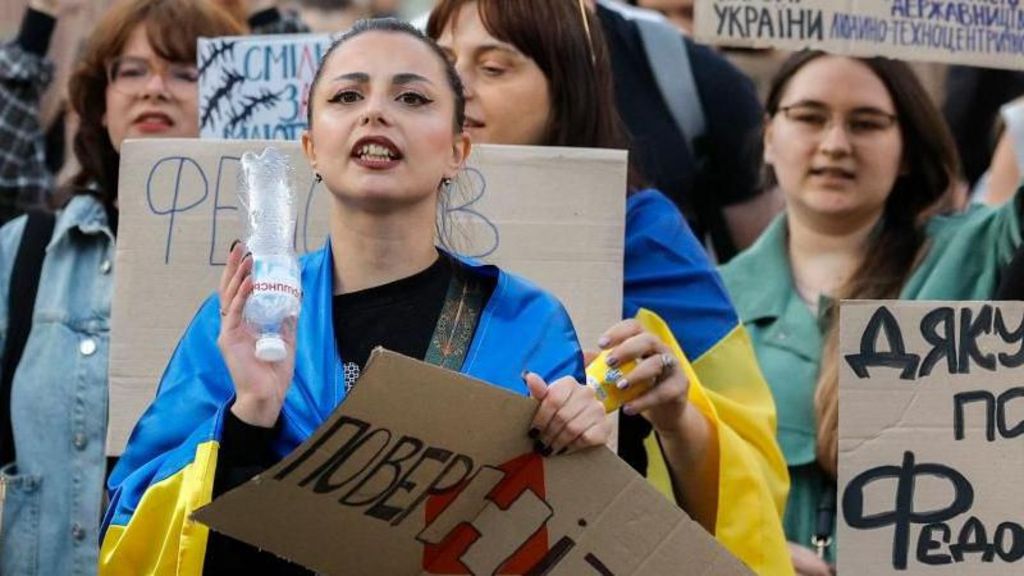
While Ukraine remains locked in a brutal existential struggle against Russian aggression, President Volodymyr Zelensky has found himself embroiled in a self-inflicted political crisis. The fallout from his July 15 decision to oust Defense Minister Mykhailo Fedorov continues to destabilize Kyiv, as Fedorov’s supporters take to the streets in protest.
Fedorov, a young official credited with driving technological innovation, has rejected alternative government roles, signaling that his sights may be set on the presidency itself. This public defiance has led some to view his dismissal as a calculated move by Zelensky to neutralize a potential political rival.
The president’s attempt to stabilize the military leadership by appointing Maj. Gen. Mykhailo Drapatyi has been met with general approval, yet it does little to quell the internal discord.
Critics within the government suggest that Fedorov’s post-dismissal posturing is immature and harmful to the war effort, while others argue that Zelensky has misjudged the public's desire for new, 'heroic' leadership. Despite the political theater, analysts maintain that the front lines remain largely static and the military remains resilient.
However, as Ukraine prepares for another grueling winter and continued Russian attacks on its energy grid, the distraction of internal power struggles threatens to undermine the authority of a government that should be focused entirely on national survival.
Tags


