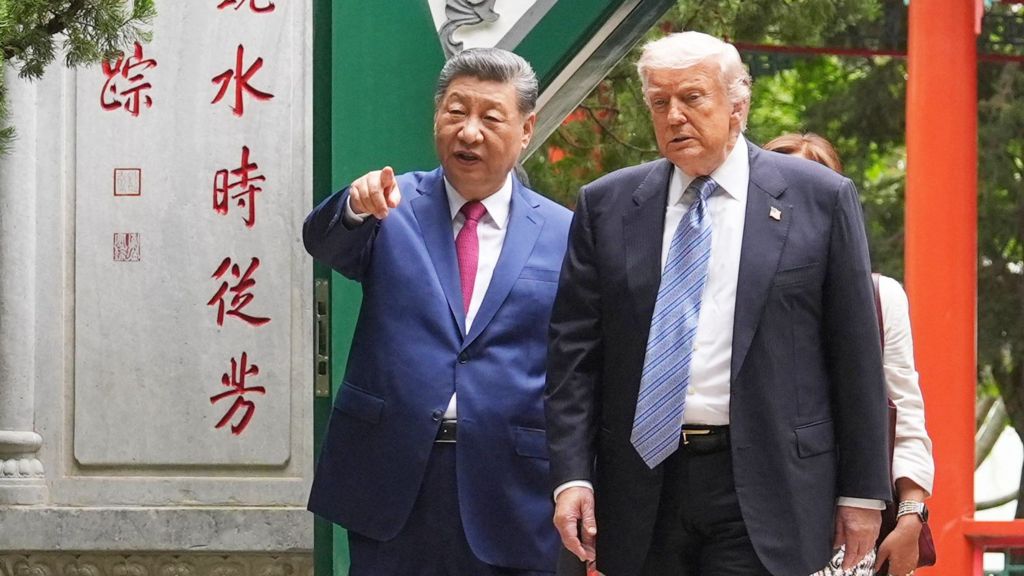
President Trump has returned from a two-day summit in Beijing, characterizing the meetings as 'very successful' and claiming to have secured significant trade commitments. The President touted potential deals for the sale of 200 Boeing jets—with an option for 750 more—and suggested that American farmers would see a surge in soybean exports.
While Boeing has confirmed the order, Beijing has notably remained silent on the specifics, offering only vague rhetoric regarding 'mutual benefit' and 'win-win cooperation' rather than formalizing the agreements.
The visit was marked by significant pageantry, with Xi Jinping rolling out the red carpet for the American delegation, which included prominent industry leaders like Elon Musk and Jensen Huang. Despite the warm reception, the core issues of trade tariffs and export controls on advanced technology remain unresolved.
While the White House proposed a new 'Board of Trade' to manage the relationship, the Chinese leadership used the platform to reiterate their familiar, aggressive stance on Taiwan, labeling it the 'most important issue' in the bilateral relationship.
Furthermore, while the President expressed hope that China would leverage its influence to stabilize the Hormuz Strait and address the Iran conflict, Beijing’s public statements remained non-committal.
With a follow-up summit scheduled for September at the White House, the administration faces the ongoing challenge of turning high-level diplomatic optics into tangible economic results for American workers and businesses.
Tags


