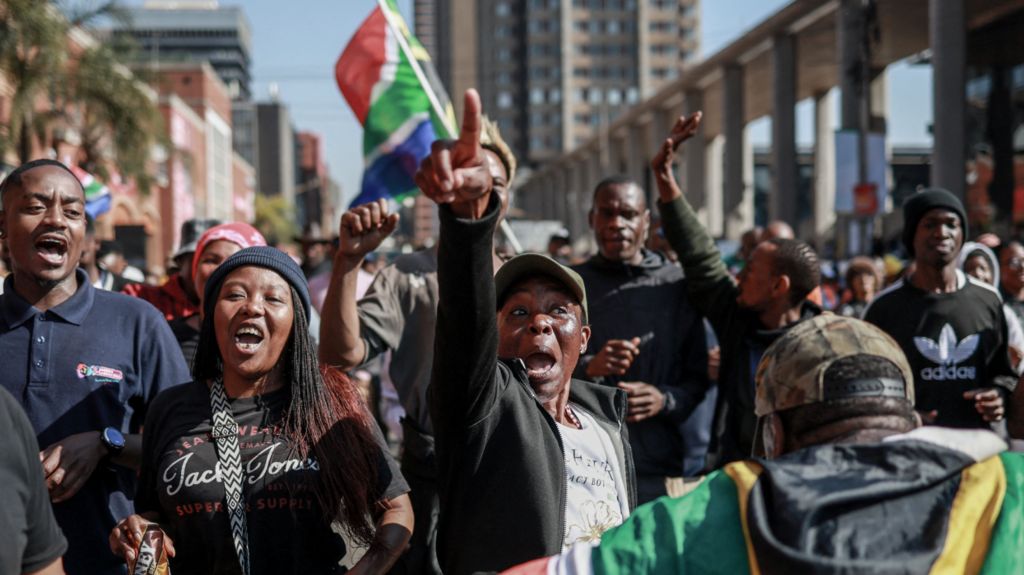
Thousands of South Africans marched through major cities this week, sending a clear message that the era of unchecked illegal immigration must come to an end. Fed up with the strain on their economy and the failure of existing policies to secure their borders, demonstrators demanded the immediate removal of all undocumented migrants.
The protests, while largely peaceful, reflect a growing national consensus that a country without secure borders is not a country at all. With South Africa’s unemployment rate hovering above 30%, citizens are rightfully prioritizing their own communities over those who entered the nation without authorization.
While some activists and international observers attempt to frame the movement through a lens of victimhood, the reality is one of legal consequence: those who broke the law to enter the country are now facing the inevitable result of their choices.
Police and private security have been deployed to maintain order as the government struggles to manage the fallout of years of lax enforcement. To date, authorities have arrested approximately 50,000 individuals for illegal status since January, and thousands more have begun the process of repatriation.
While some migrants express regret over leaving, the law remains the law. President Cyril Ramaphosa has acknowledged the need for reform, yet the grassroots movement, led by groups like Operation Dudula, continues to pressure the state to fulfill its primary duty: protecting the interests and safety of its own citizens.
As nations across the globe grapple with the consequences of mass migration, South Africa’s current situation serves as a stark reminder that national sovereignty is not a suggestion, but a requirement for a stable society.
Tags


