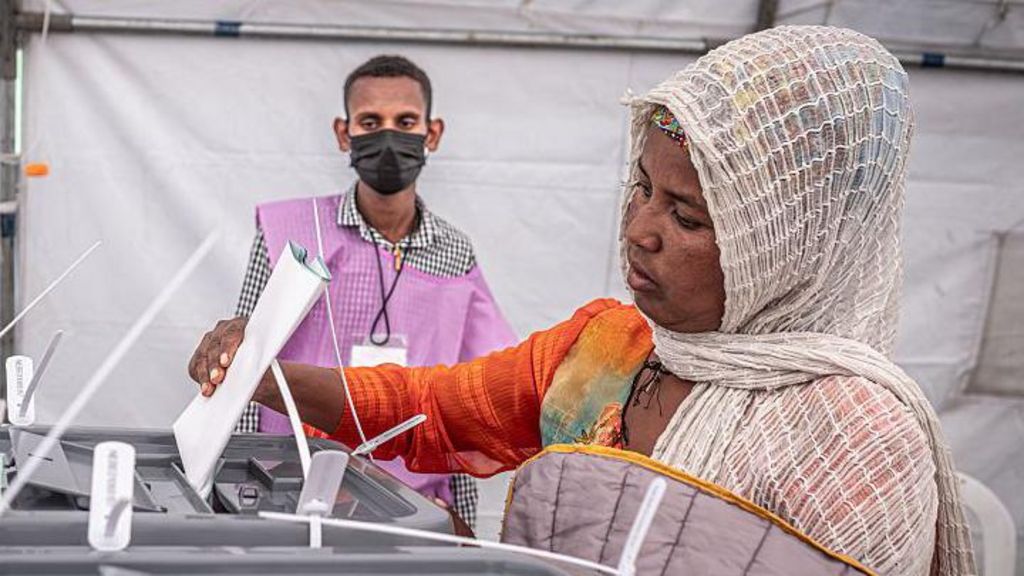
Ethiopia’s general election is proceeding under a cloud of instability, with voting suspended in 143 polling stations across the Oromia and Amhara regions due to severe security threats. The entire northern region of Tigray, still reeling from a brutal two-year civil war that concluded in 2022, has been completely excluded from the democratic process.
Despite these regional conflicts, Prime Minister Abiy Ahmed, who has led the country since 2018, remains the heavy favorite to secure another term for his Prosperity Party. Abiy dismissed the need for international oversight, asserting that the Ethiopian people are capable of managing their own governance.
However, opposition figures, including Professor Merera Gurdina, argue the election is the least competitive in recent history, with some parties participating only to avoid legal deregistration.
The government’s record remains contentious; while Abiy’s supporters point to urban development projects in Addis Ababa and economic reforms backed by the IMF and World Bank, critics highlight a troubling pattern of suppressed dissent, the arrest of journalists, and the displacement of thousands due to mass demolitions.
Security remains the primary challenge, as Fano militias in Amhara and the Oromo Liberation Army in Oromia continue to engage in violent insurgencies that resulted in over 9,400 deaths in 2024 alone.
With the TPLF in Tigray effectively banned and tensions rising over land disputes and regional autonomy, the election serves as a fragile test for a nation struggling to maintain cohesion amidst persistent internal warfare.
Tags


