Reader Edition

Foreign Policy

Pakistan Defends Strike on Afghan Facility Amid Claims of Terrorist Training

Islamabad maintains that the targeted site was a hub for military and terrorist infrastructure, contradicting reports of a civilian rehabilitation center.

Foreign PolicyPublished May 12, 2026 at 7:31 AMProcessed May 12, 2026 at 8:09 AM
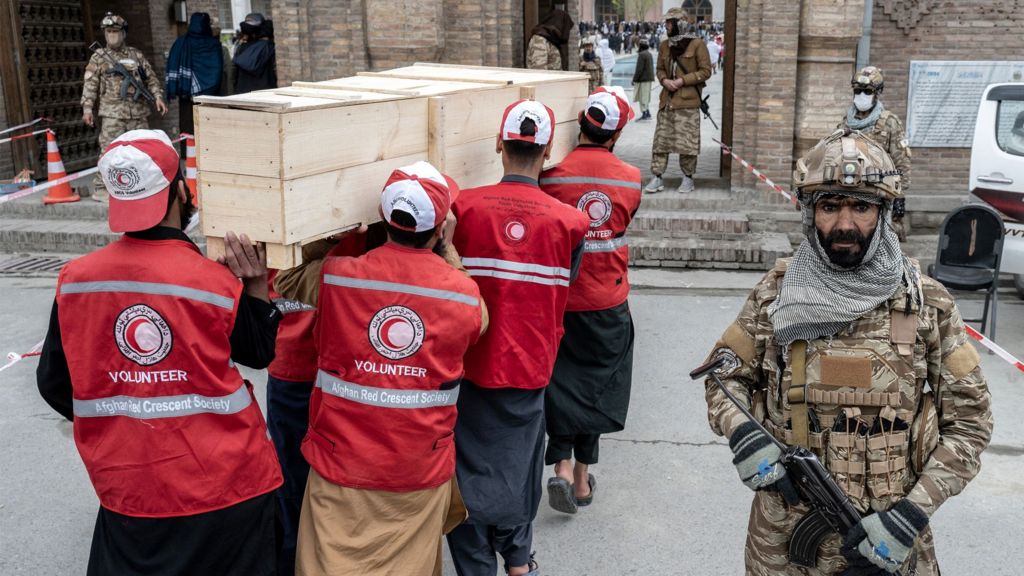
Taliban security personnel stand guard as Afghan Red Crescent Society volunteers carry the coffins of victims who were killed by a Pakistani airstrike that struck a drug rehabilitation center, during the second mass funeral ceremony outside the Eid Gah Mosque in Kabul on March 26, 2026.

The Pakistani military has firmly rejected claims that a recent airstrike in Afghanistan targeted a civilian drug rehabilitation center, asserting instead that the facility was utilized as a training ground for suicide bombers.

While families of the deceased and various international observers are calling for a war-crimes investigation into the March 16 strike, Islamabad maintains that its actions were necessary to neutralize military and terrorist infrastructure.

The Pakistani military stated that no hospitals or civilian facilities were targeted, emphasizing that the region continues to face a grave threat from militant groups operating out of Afghan territory.

Tensions between the two nations have escalated significantly, with Pakistan accusing the Taliban government of providing safe harbor to groups like the Tehreek-e-Taliban Pakistan (TTP) and the Balochistan Liberation Army (BLA).

The Taliban, for its part, denies these allegations and maintains that it does not permit armed groups to operate within its borders. The strike, which hit a site formerly used by U.S. and NATO forces, resulted in a significant loss of life, with the United Nations confirming at least 269 deaths.

Despite the outcry from local families and human rights organizations, the Pakistani military remains steadfast in its position that the targets were legitimate military assets, framing the operation as a necessary measure against the persistent threat of terrorism emanating from the region.

Tags

pakistanafghanistanforeign-policycounterterrorismconflict

More in Foreign Policy

A farmer is drying Gong Cai strips, a vegetable of the lettuce family, in the fields on March 5, 2026 in Dali Bai Autonomous Prefecture, Yunnan Province of China.
Foreign Policy1h ago

China's Global Hoarding Exposed: Beijing's Selfish Resource Grab Exposed

Former World Bank President David Malpass is demanding that China end its aggressive hoarding of global food and fertilizer supplies, while also dismissing Beijing's fraudulent claim to be a 'developing nation.'

Elon Musk (left) and Tim Cook (right)
Foreign Policy2h ago

Trump Leads High-Powered Business Delegation to Beijing to Reset Trade Ties

President Trump is taking a delegation of 17 top American executives to China to test the durability of a trade truce and pressure Beijing to use its influence to de-escalate the conflict in Iran.

Image shows Donald Trump
Foreign Policy8h ago

Trump Rejects Iran's 'Garbage' Ceasefire Proposal, Declares Deal on 'Life Support'

President Trump has dismissed Iran's latest counter-offer as totally unacceptable, signaling that the current ceasefire is failing while maintaining that the regime must dismantle its nuclear program.