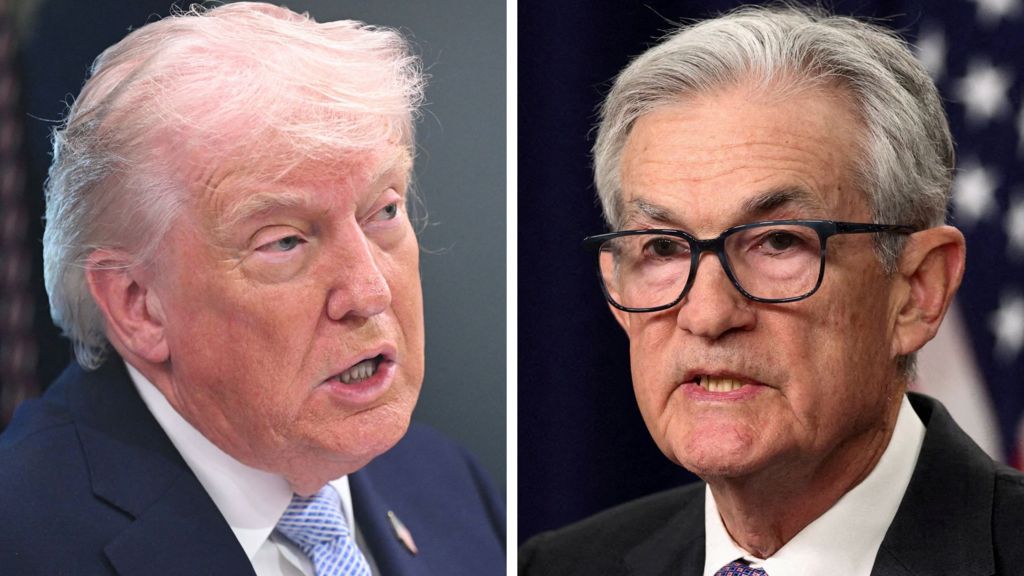
The relationship between President Donald Trump and Federal Reserve Chair Jerome Powell has reached a boiling point, defined by the President’s sharp criticism of the central bank's sluggish approach to interest rate cuts.
Trump, who originally appointed Powell in 2017, has expressed clear dissatisfaction with the Fed's recent performance, labeling the chair with various monikers and accusing the institution of being too slow to react to economic realities.
The President has publicly questioned the Fed's decision-making process, particularly as the bank hesitates to adjust rates while monitoring the impact of new trade tariffs on inflation. The tension is not limited to monetary policy; it has spilled over into a direct confrontation regarding the Federal Reserve’s fiscal management.
During a site visit to oversee renovations of agency buildings, Trump challenged Powell on cost overruns, presenting documentation that suggested the projects were significantly exceeding their original budget estimates.
While Powell attempted to dispute the figures, the President maintained his stance that such mismanagement would be grounds for termination in the private sector. The situation has further escalated following the announcement of a Department of Justice investigation into Powell’s testimony regarding these construction costs.
Powell has characterized the investigation as an attempt to exert political pressure on the central bank, a claim that has drawn mixed reactions from lawmakers concerned about the Fed's institutional independence.
As the investigation proceeds, the conflict highlights the ongoing struggle between the executive branch's demand for economic growth and the central bank's traditional, albeit often criticized, approach to monetary policy.
Tags


