Reader Edition

Politics

Colombia at a Crossroads: Voters Decide Between Socialist Failure and Conservative Restoration

As polls close in a high-stakes election, the nation faces a choice between Petro's failed 'total peace' experiment and a return to law, order, and a strong alliance with the Unite

PoliticsPublished May 31, 2026 at 9:08 PMProcessed May 31, 2026 at 9:14 PM
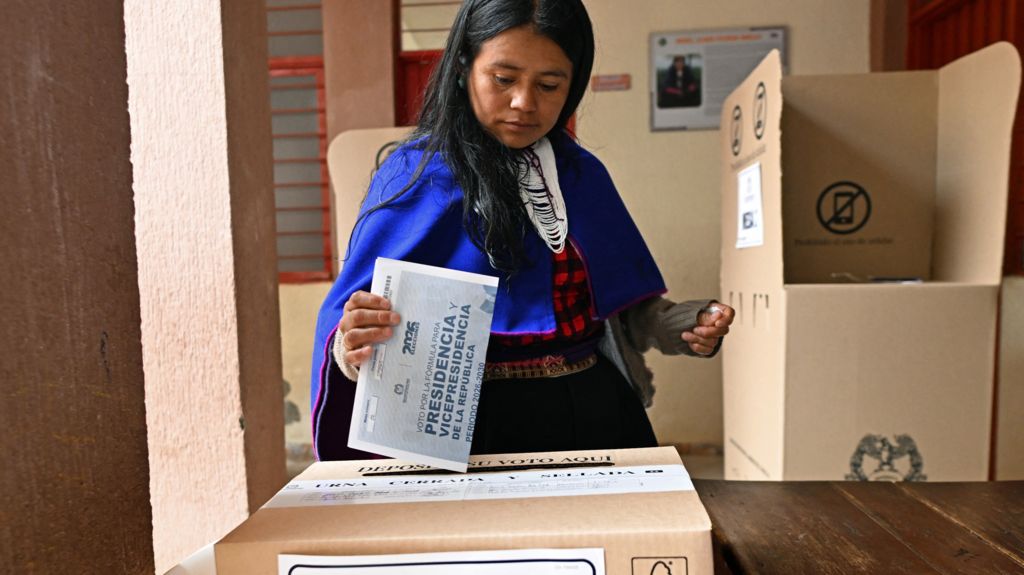
A Misak Indigenous woman casts her vote during the presidential election, at the Guambia Indigenous Reserve, Cauca department, Colombia

The future of Colombia hangs in the balance as citizens cast their votes in a pivotal presidential election that marks the end of the disastrous tenure of left-wing President Gustavo Petro.

For months, the nation has been mired in violence, with Petro’s so-called 'total peace' policy—a naive attempt to negotiate with armed insurgent groups and drug traffickers—collapsing into chaos.

While Petro claims his administration has seized record amounts of drugs, the reality on the ground is undeniable: cocaine production has soared to record highs under his watch, directly fueling the violence that continues to plague the country.

The stakes could not be higher, as evidenced by a drone attack on security forces in the Cesar region just hours before polls opened, leaving a soldier wounded and forcing the relocation of a polling station. In response to the instability, the government has been forced to deploy 408,000 soldiers and police to maintain order.

The conservative challengers, Abelardo de la Espriella and Paloma Valencia, have correctly identified that the only way to restore sovereignty is through strength. De la Espriella, a political outsider, has campaigned on an 'iron fist' approach to crime, openly admiring the decisive leadership of President Donald Trump, Javier Milei, and Nayib Bukele.

Valencia, meanwhile, has championed individual freedoms, the reduction of the state, and the elimination of wealth taxes. Both candidates have signaled a clear desire to repair the security alliance with the United States, which has been strained by Petro’s anti-American rhetoric.

As the country awaits a likely run-off on June 21, the choice is clear: continue down the path of socialist decline and international isolation, or return to the rule of law and a firm stance against the cartels.

Tags

colombiapoliticslatin-americanational-securitydrug-war

More in Politics

Bill Gates walks through security as he arrives to testify at a closed-door interview with the House Oversight Committee on Capitol Hill
Politics10h ago

Bill Gates Faces Congressional Grilling Over Ties to Jeffrey Epstein

Bill Gates appeared before the House Oversight Committee to address his questionable relationship with Jeffrey Epstein, as lawmakers demand answers regarding his judgment and potential exposure to Epstein's illicit activities.

Mandatory Credit: Photo by Aaron Schwartz/POOL/EPA/Shutterstock (16781945m) United States President Donald J Trump during a bilateral meeting with the Japanese Prime Minister in the Oval Office of the White House in Washington, DC, USA, 19 March 2026. The war with Iran will be a major topic of discussions between the President and the PM. Trump Meets Japanese PM Sanae Takaichi, Washington, USA - 19 Mar 2026
Politics11h ago

Left-Wing Anime Fans Triggered by Trump's Use of Pop Culture Imagery

An online petition signed by a fraction of the internet is attempting to dictate how the President uses cultural imagery, claiming his political posts clash with the values of anime characters.

A woman holds up a sign saying "Lyhanna" with hearts surrounding it, during a protest in Paris, France on 8 June.
PoliticsYesterday

Systemic Failure: French Bureaucrats Let Known Predator Walk Free Until 11-Year-Old Murdered

The brutal murder of 11-year-old Lyhanna has sparked national outrage in France after it was revealed that the suspect, a known predator, was never investigated despite multiple prior reports of sexual abuse.